Give Them Someone to Write To: Why Thank-You Notes Build Joyful Writers
Picture two pieces of writing from the same child.
The first is a row of practice letters, copied carefully, checked, and put in a folder. Nobody reads it again.
The second is a wobbly card with a crayon heart, three letters that might spell love, and a name signed so big it runs off the edge. It goes into an envelope, gets a sticker for a stamp, and is handed to Grandpa. He reads it twice. He puts it on the fridge.
Which one do you think your child wants to do again?
In my years of teaching, the most reluctant writers I ever had would often light up for exactly one kind of writing: a note to someone. A card for a sick classmate. A letter to a favorite author. The pencil hadn't changed. The reason had.
Writing without a reader
So much of the writing children are asked to do has no real reader. It's copied, corrected, and filed. Children notice. When writing only ever goes to a grown-up who checks it, it can start to feel like a test. And many children quietly decide they'd rather not take it.
A thank-you note works differently. It has a real person on the other end, a real reason to exist, and a real reaction waiting. It changes the question in your child's mind from "Is this right?" to "Will they love it?"
That's a much more inviting question to answer.
Every mark is a message
For a young child, a thank-you note might be a drawing, a row of scribbles, or a few letters strung together. That is writing.
Your child is showing that they understand one of the biggest ideas in literacy: marks on paper carry a message from one person to another. Spelling and neat letters come later. This idea comes first.
Ask your child to read their note to you. Then, only if they'd like, add a small caption underneath or on the back, just like the words beside a picture in a book. The caption helps the reader follow along, while your child's writing stays front and center. (If your child would rather say the words and have you write them, that's dictation, and it counts as writing too.)
The small trap (and how to step around it)
Here's where caregivers, with the very best intentions, sometimes turn the note back into a test. We fix the spelling before it goes out. We ask for neater letters "so Grandma can read it." We remind our child that they have to write it.
The note still gets sent. But the joy doesn't always make it into the envelope.
A few gentle swaps can help:
Instead of
Try
"Let's fix the spelling before we send it."
"Grandma is going to love reading this. Want me to add a caption so she can read along?"
"You have to write a thank-you note."
"Who made you smile this week? Should we tell them?"
"Write neatly so they can read it."
"Read it to me, so I know just what it says."
"That's so good!"
"Our neighbor is going to know you noticed his garden."
That last one matters most. When you point to the effect on the reader, you're teaching your child what writing is really for.
Always write back
If there's one habit worth keeping, it's this: when your child writes to you, answer.
A simple family mailbox makes this easy. It can be a shoebox, a paper bag, or anything with a flag your child can raise when there's mail inside. Leave notes for each other all month. A "good morning." A joke. A thank-you for helping with dinner.
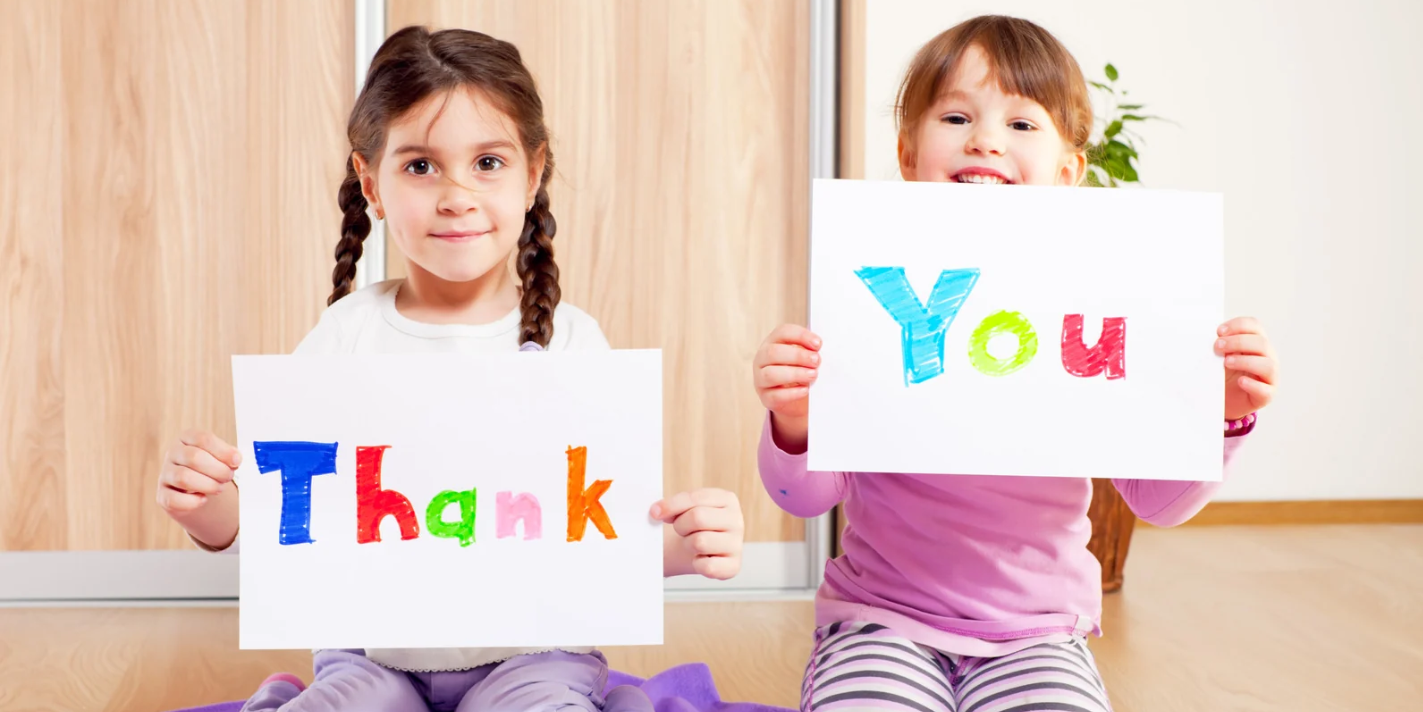
Keep your replies short and easy to read: a big "THANK YOU," a drawing, a heart. Your child doesn't need a long letter. They need proof that their words landed somewhere.
For older and reluctant writers, this back-and-forth can be quietly powerful. The notes are tiny. Nobody's grading them. And someone is waiting to read every one.
What this looks like at home
Your child dictates a thank-you to the mail carrier, signs it, and tapes it to the mailbox.
They draw a picture for a grandparent, and you add their words on the back.
They slip a note into the family mailbox, raise the flag, and wait (impatiently) for a reply.
An older child copies an address onto an envelope and drops it in a real mailbox.
Your child plays "mail carrier," delivering tiny notes to pillows and toothbrushes around the house.
The shift to try
This week, before you ask your child to write anything, ask: who is it for? Give their writing somewhere to go, and someone to answer it.
This month's Rhyme & Post Box was built around exactly that idea. Inspired by Thanks for Thanksgiving by Julie Markes, it includes cards and envelopes, postage stickers and stamps for sealing notes, and a fold-up family mailbox with a flag that really moves. Your child writes, draws or dictates thank-yous to the people they love, and then watches for the flag.
Want to bring this home?
If this is the kind of hands-on, screen-free learning you want more of, we'd love to help you start.
Rooted in Writing is a monthly subscription box that pairs a beautiful picture book with open-ended activities that grow early writing and fine motor skills. It's designed for emerging writers (preschool through grade 2) and reluctant writers (grades 3 and up), with all materials included. You can start a subscription any time at rootedinwritingbox.com/shop.
Not ready to subscribe? Start with one of our freebies instead. It's a simple, no-pressure way to bring a little of this to your table this week.
Either way, the invitation is the same: give your child someone to write to, and then write back. ✏️